Canada Finally Fights Back but Carney’s Steel and Lumber Rescue Plan May Be Too Little, Too Late
Abdur Rahman Khan
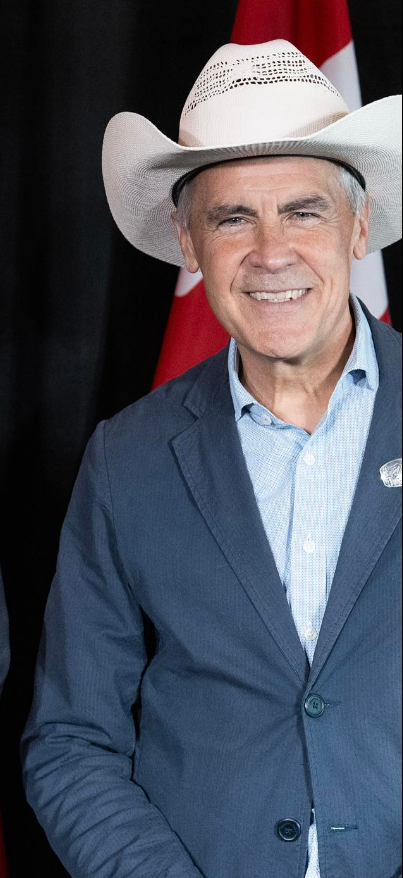
Prime Minister Mark Carney’s announcement of $500 million in loan guarantees for Canada’s softwood lumber sector and sweeping new limits on foreign steel imports is being framed as a bold defence of Canadian industry. But if we’re honest, these moves feel less like strategy and more like damage control in the aftermath of Donald Trump’s tariff barrage.
Canada’s steel and lumber sectors have been absorbing body blows for months. A 50% U.S. tariff on Canadian steel and a recent hike pushing softwood lumber duties to 45% have left workers jittery and mills on the brink. The federal government had to respond the question is whether it acted quickly or decisively enough.
Carney’s new import quotas slash steel from non–free trade countries to 20% of last year’s levels, down from an already-tight 50% imposed in July. Even countries with trade agreements (excluding the U.S. and Mexico) are getting squeezed down to 75%. Anything above those thresholds triggers a punishing 50% surtax. And on top of that, Ottawa is layering a global 25% tariff on steel derivative products everything from wind towers to prefab buildings.
Carney touts that this will “unlock” $850 million in new domestic demand for Canadian steel. Maybe it will. But even supporters of these measures would admit that the timing feels reactive. Trump didn’t hide his intentions he’s been escalating tariffs since June. Canada is only now slamming the brakes on dumping and cutting freight rates for domestic transport by 50%, something steel producers have begged for years.
The political tensions are impossible to ignore. Conservative Leader Pierre Poilievre wasted no time accusing Carney of spending “billions more” to cover up failed negotiations with Trump. And he has a point: Trump walked away from trade talks last month after Ontario ran TV ads using Ronald Reagan clips to critique tariffs. It was an avoidable diplomatic blunder with predictable consequences.
Meanwhile, Carney insists the U.S. and Mexico are unaffected by these new restrictions a not-so-subtle attempt to keep the door open for repairing the relationship. He claims he’s ready to re-engage on trade “when the United States wants to re-engage,” but considering Trump’s unpredictability, that could be tomorrow or never.
Yet amid the political theatre, one thing stands out: Canada is finally acting with the same defensive urgency as other major economies. As Industry Minister Mélanie Joly pointed out, the EU and South Korea are also tightening their borders to protect steel from global oversupply and price manipulation. The world is circling its wagons why shouldn’t Canada?
Catherine Cobden of the Canadian Steel Producers Association called the measures a meaningful step to combat dumping. That endorsement matters. Workers and mills need immediate relief, not theoretical trade optimism.
The real test, however, will be whether these actions merely stabilize the bleeding or actually spur growth. Carney’s newly announced Forest Sector Transformation Task Force sounds promising, but Canadians have seen enough task forces to know that consultations don’t guarantee outcomes.
Ultimately, Ottawa is playing catch-up in a trade war it didn’t start but definitely underestimated. These measures may help in the short term, but unless Canada secures a sustainable path back into the U.S. market tariff-free both the steel and lumber industries will remain in a state of chronic uncertainty.
Canada has finally stood up for itself. Now it needs a plan that lasts longer than the next tariff threat.


![Three smiling women sit on a colorful padded floor, posing with a large sign that reads Canada Child Benefit and its French translation, in a community setting with a pillow saying This Classroom Runs on Kindness nearby.]','Three women pose for a group photo indoors, holding a white board about the Canada Child Benefit and its French equivalent, with colorful circles in the design and a kindness-themed cushion nearby.'] }``` Wait formatting wrong. We must provide proper JSON. Let's craft properly. Provide 5 options. Ensure no stray quotes. Let's produce proper JSON. Use single quotes in descriptions? Must be double quotes. I'll provide array of strings. Ensure no stray characters. Let's do. } For safety. Let's output.} Let's craft final.} Wait earlier included typos. Let's deliver.]]>](https://www.thesouthasiajournal.com/wp-content/uploads/2026/07/12-2-390x220.jpg)