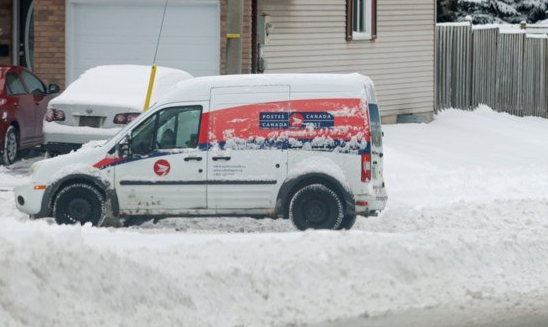
After more than two years of strikes, stalled talks, and growing financial anxiety, Canada Post and the Canadian Union of Postal Workers (CUPW) have finally reached tentative agreements that promise to restore labour peace. On the surface, this looks like a win for everyone involved: workers get wage increases and job protections, the company gets operational certainty, and Canadians may finally get reliable mail service again. But beneath the relief lies a deeper question have the real problems been solved, or merely postponed?
The proposed five-year agreements offer postal workers something they have been fighting hard to protect security. Wage increases of 6.5 per cent in the first year and three per cent in the second, followed by inflation-linked raises, provide a degree of financial predictability in uncertain times. Enhanced health benefits and the preservation of the existing pension plan will be especially reassuring to workers who feared that concessions would erode long-standing gains. From CUPW’s perspective, blocking major changes to work schedules and safeguarding pensions is no small victory.
Union leadership is right to frame this as a stabilizing moment. After two national strikes and months of tension, postal workers deserve a break. Communities and small businesses many of which were hit hard during last winter’s holiday-season strike also stand to benefit from a return to dependable service.
Yet stability comes at a price, and for Canada Post that price is steep. The Crown corporation has been clear about its financial distress, reporting losses exceeding a billion dollars last year and warning that the situation is worsening. Declining letter mail and fierce competition in parcel delivery are not temporary setbacks; they are structural shifts. While the new agreements create a framework for weekend parcel delivery, details remain vague, leaving open the question of whether this “new operating model” will help Canada Post compete in a crowded market.
There is also an uneasy political backdrop. Federal government measures aimed at saving the company such as reduced letter delivery standards and a shift toward community mailboxes sparked the most recent strike. Allowing post office closures in areas that have grown from rural to suburban may make sense on paper, but it risks further alienating workers and communities already wary of service cuts.
In that sense, these agreements feel less like a turning point and more like a ceasefire. They buy time five years of labour peace, if ratified but they do not resolve the fundamental tension between a public service mandate and harsh economic realities. Canada Post is being asked to act like a competitive business while still serving remote, rural, and Indigenous communities where profitability is not the point.
For now, both sides can claim a win. Workers have protected their livelihoods, and Canada Post has avoided another costly strike. But unless this period of calm is used to rethink the future of the national mail carrier, Canadians may find themselves back at the negotiating table sooner than they expect arguing once again over how to keep a vital public service alive in a rapidly changing world.


![Three smiling women sit on a colorful padded floor, posing with a large sign that reads Canada Child Benefit and its French translation, in a community setting with a pillow saying This Classroom Runs on Kindness nearby.]','Three women pose for a group photo indoors, holding a white board about the Canada Child Benefit and its French equivalent, with colorful circles in the design and a kindness-themed cushion nearby.'] }``` Wait formatting wrong. We must provide proper JSON. Let's craft properly. Provide 5 options. Ensure no stray quotes. Let's produce proper JSON. Use single quotes in descriptions? Must be double quotes. I'll provide array of strings. Ensure no stray characters. Let's do. } For safety. Let's output.} Let's craft final.} Wait earlier included typos. Let's deliver.]]>](https://www.thesouthasiajournal.com/wp-content/uploads/2026/07/12-2-390x220.jpg)