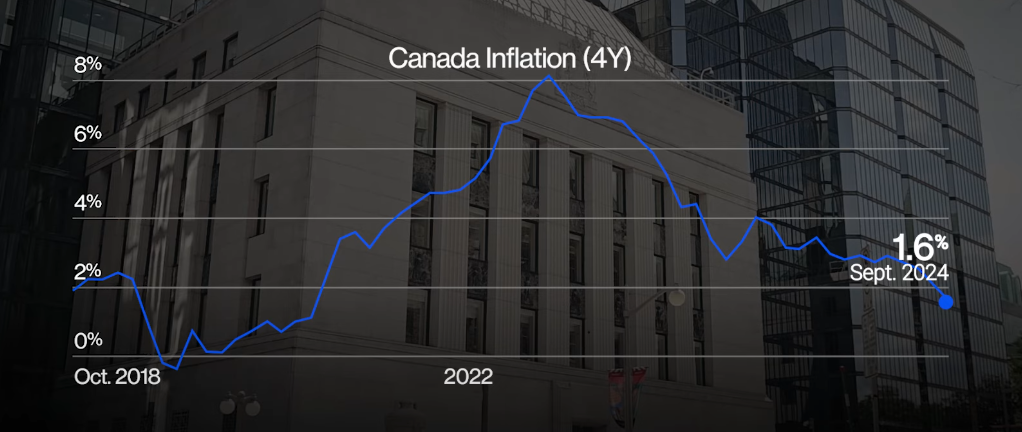
For the first time in years, Canadians are getting a piece of good news on the inflation front. Statistics Canada reported that annual inflation slowed sharply in September, falling to 1.6 per cent below the Bank of Canada’s two per cent target. On paper, this sounds like a victory. In reality, it’s more complicated than that.
The drop was largely fueled by cheaper gasoline, with airfares and some clothing categories also seeing annual declines. But when it comes to life’s essentials, the story isn’t nearly as rosy. Grocery prices are still climbing, up 2.4 per cent compared to last year, with beef, eggs, and cooking oils all stubbornly more expensive. Shelter costs remain painfully high too rent rose 8.2 per cent in September. For Canadians, these are not optional costs; they’re the bills you can’t dodge.
Over the past three years, the consumer price index has jumped 12.7 per cent, with rent surging 21 per cent and groceries up 20.7 per cent. Even if inflation is slowing now, prices have already locked in at much higher levels. As economist Tu Nguyen put it, “We are not going to see prices straight-up coming down.” In other words, this isn’t about going back to pre-pandemic prices it’s about learning to live with a new, more expensive baseline.
That reality explains why many Canadians aren’t exactly celebrating. The Bank of Canada may look at these numbers and consider aggressive interest rate cuts possibly even a 50-basis-point move later this month to keep inflation from falling too far below target. Financial markets are already betting heavily on such a cut.
But here’s the danger: while lower rates could give businesses and households some breathing room, too much easing could tip Canada into an entirely different problem. If inflation cools too much, consumer spending could stall, as people hold off purchases expecting lower prices ahead. That’s a recipe for economic slowdown or even recession.
This is the tightrope the Bank of Canada is now walking. Go too slow on rate cuts, and the economy risks grinding to a halt. Go too fast, and inflationary pressures might resurface later. Canadians, meanwhile, are caught in the middle still struggling with the weight of elevated food and housing costs, while watching policymakers debate how much pain is enough.
Yes, the September inflation report offers some relief, but let’s not mistake slowing inflation for falling prices. For most households, the math hasn’t really changed: groceries and rent remain punishing, and wages haven’t kept pace. Inflation may be “in a better place,” as some experts put it, but the lived reality for Canadians is that affordability remains the central economic challenge of our time.