Former Foreign Minister AK Abdul Momen once said in an interview, ‘India-Bangladesh relationship is like a husband-wife relationship, even if there are minor disagreements, they are resolved.’ The two countries are supposed to have a mature and diplomatic relationship, where policies are based on mutual respect and cooperation. But Obaidul Quader’s comments were irrelevant to the true picture of such relations and gross examples of such comments made the General Secretary of Bangladesh Awami League absolutely foolish. His such comments show that he is not properly aware of diplomatic relations and its importance. When Awami League supporters resort to personal attacks to avoid criticism of such comments, they actually want to divert attention from the problem.
The question is whether the use of such absurd examples is a manifestation of the lack of maturity of a political leader, and what message the general public gets from it. A responsible leader’s speech must be commensurate with the importance of his position, which was not the case in this case.
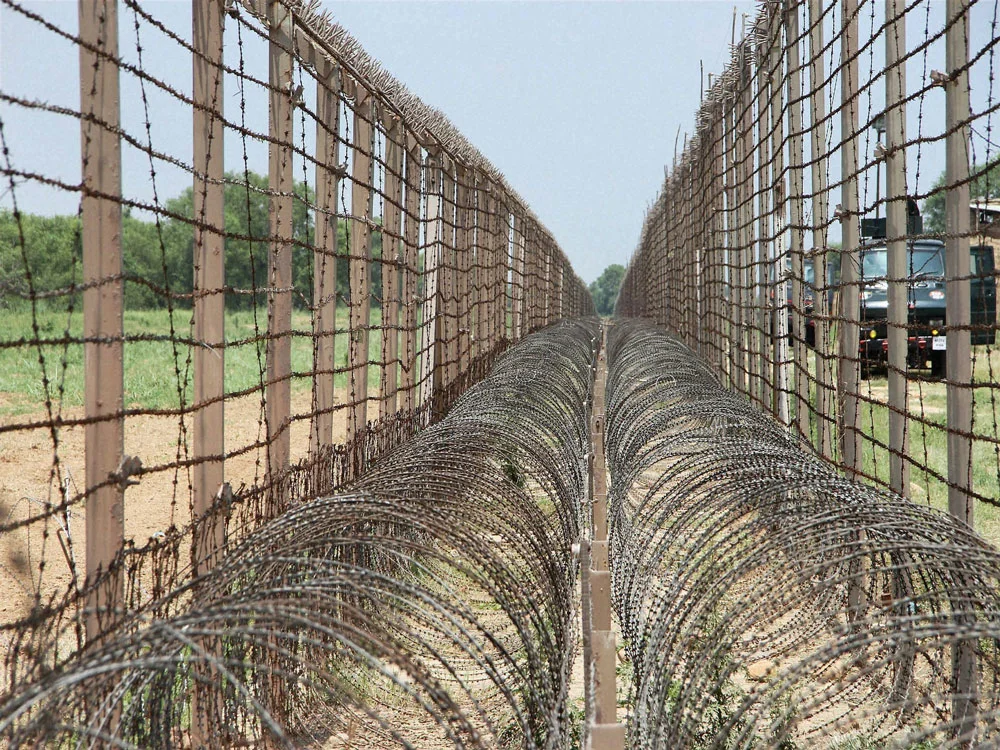
India-Bangladesh relationship is not that of husband and wife, but according to most, the relationship of servant-servant. No general example is needed to understand the true picture of this relationship, the reality of border killings is enough. 522 Bangladeshis were killed by the BSF from 2009 to 2020, indicating a disproportionate and exploitative relationship. 31 Bangladeshis lost their lives in BSF firing in 2023 alone. No Indian citizen was killed in these killings, highlighting the imbalance in the relationship between the two countries.
In such a situation, the question arises, what kind of relationship can one country’s security forces kill innocent citizens of another country like this and it continues.
If the relationship between the two countries is assumed to be family, then can anyone say with their hands on the chest that one side in the world continues to kill unilaterally? In normal married life there are quarrels, discord, but neither party commits unilateral murder.
From my personal experience of 28 years of married life, there are arguments, wins and losses, but neither side ever rules the other side. But this is what is happening in Bangladesh-India relations, where India is abusing its dominant position and putting the lives of Bangladeshi citizens at risk.
The brutal killing of teenage girl Felani Khatun on the Kurigram border in 2011 made us all face a big question: Has our government managed to ensure justice for this murder?
Photos of Felani’s body hanging on barbed wire were circulated in the international media, but no BSF personnel were punished for the heartbreaking incident. The man who shot him was initially convicted but later acquitted in an Indian court. After that, the case went on in the Supreme Court of India, but no final decision has been made yet. This indicates a kind of failure of Indian democracy, where the death of an innocent girl has not received justice even after 13 long years.
The incident of Swarna Das proves once again that BSF does not hesitate to kill common people of Bangladesh on any pretext. In 2024, Swarna Das was shot dead by the BSF at Lalar Chowk border in Kulaura, who they termed as an illegal infiltrator.
The term illegal is acting as a kind of killing justification for the BSF. Killing Bangladeshis for trespassing on any border is not justified at all. This is a violation of human rights, where a country is able to indiscriminately kill citizens of its neighboring country, and there is no sign of effective resistance from the government of Bangladesh.
So now the question arises, if there was really a familial relationship between India and Bangladesh, would such one-sided killings have happened? The main condition of a respectful relationship is mutual respect. But here no respect for India can be observed. So Bangladesh should end this alleged marital relationship and demand ‘talaq’ from India. We can no longer allow India to be in this relationship, where our citizens lose their lives and we fail to respond. To restore our dignity we must end this humiliating relationship and strengthen our position as a respectable independent state.
Ultimately, if the BSF kills a Bangladeshi, we should respond befittingly, be it through preventive measures or diplomatic pressure. The current government must prove that it is more courageous than the previous government and committed to safeguarding the country’s security and honor. We would like to see the current government not limited to mere political slogans or speeches, but take concrete steps that are capable of reacting strongly to the face of India’s woes. It is not just a military or defensive move, but a strong position with India diplomatically. The issue of border killings should be strongly addressed at the international stage, especially before the United Nations and other international human rights organizations.
Bangladesh should not keep its relations with India only in the envelope of diplomatic friendship, but take a strong stand where necessary. Diplomatic reconciliation is one thing, but when the lives of citizens of a state are at stake and justice is denied, it is imperative to rethink that relationship.
We want to see that the current government can establish its self-esteem and stand firm in front of Indian pride. Protecting Bangladesh’s independence and sovereignty requires bold leadership, and this government must take up that challenge.