Fuel Crisis Forces Air Canada to Ground Toronto-JFK and Montreal-JFK Routes This Summer
Manjit Sing
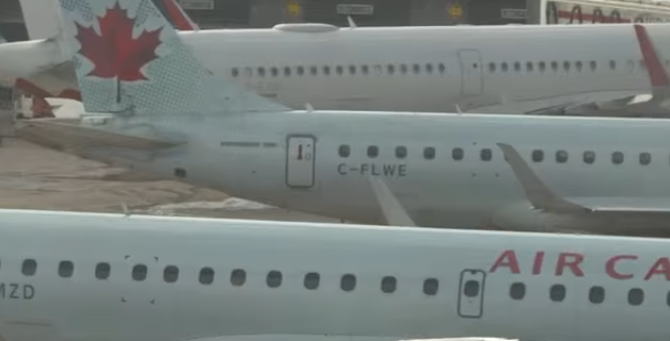
Air Canada announced Friday that it will suspend all flights between Toronto and New York’s John F. Kennedy International Airport, and between Montreal and JFK, starting June 1 a move the airline attributes directly to jet fuel costs that have more than doubled in the wake of the Iran conflict.
The suspension is scheduled to last through October 24, with service set to resume the following day. Passengers already booked on those routes will be notified individually and offered alternative travel arrangements, the airline said.
“As we regularly do, we monitor and review our network to ensure that routes are meeting profitability targets,” an Air Canada spokesperson said in a statement. “As jet fuel prices have doubled since the start of the Iran conflict and some lower-profitability routes and flights are no longer economic, we are making schedule adjustments accordingly.”
Despite the cutbacks, Air Canada stressed that it will continue flying to the New York region. Passengers from Toronto, Montreal, and four other Canadian cities will still have access to LaGuardia Airport and Newark Liberty International Airport in New Jersey.
Air Canada is not alone. Lufthansa, KLM and a growing number of carriers around the world have been quietly trimming their schedules as skyrocketing fuel costs eat into margins on routes that once turned steady profits. The catalyst has been the ongoing conflict involving Iran, which has severely disrupted oil shipments through the Strait of Hormuz.
Jet fuel a refined kerosene-based product and the single biggest operating expense for any airline typically accounts for about 30 per cent of overall costs, according to the International Air Transport Association. As of Thursday, the average price for a gallon of jet fuel had climbed to US$4.32, compared with US$2.50 just before the Iran conflict erupted, according to data from Argus Media.
Airlines have scrambled to offset those costs in a variety of ways. WestJet and other carriers have introduced fuel surcharges or raised fares. Air Canada itself announced this week that it would raise the fee for a first checked bag in basic economy class from $35 to $45 on domestic, U.S., and sun destination flights. Delta Air Lines said the fuel spike would add roughly $2 billion to its second-quarter expenses.
The crisis has hit European carriers particularly hard. The Middle East typically supplies three-quarters of Europe’s net jet fuel imports, leaving the continent dangerously exposed to any interruption. Fatih Birol, head of the International Energy Agency, warned Thursday that Europe may have “maybe six weeks or so” of fuel supplies left and cautioned that flight cancellations could follow “soon” if the Strait of Hormuz blockade continued.
Canada, by contrast, is better insulated. John Gradek, an aviation expert and professor at McGill University, noted that Canada has seven specialized refineries producing 85 per cent of the jet fuel used domestically, with the remaining 15 per cent sourced largely from the United States.
“We’re in pretty good shape in Canada” compared to Europe, Gradek told Global News.
There was a measure of relief Friday when Iran and U.S. President Donald Trump jointly announced a ceasefire and the planned reopening of the Strait of Hormuz. Markets responded quickly: oil prices fell by approximately 10 per cent, and airlines saw a brief rally in their share prices.
But Gradek urged caution. Even with the Strait open, he said it will take roughly two months to restore global aviation fuel supplies to normal levels. In the meantime, he warned, “We may have a couple weeks … of shortages.”
Gradek placed the current moment in historical context, drawing comparisons to the energy crises of the 1970s, the disruptions of September 11, the 2008 financial meltdown, and the COVID-19 pandemic. But he argued that none of those events quite resembled what is happening now.
“This is the first time in the industry that we’ve really had a choking off of aviation fuel, and the industry wasn’t necessarily ready for it,” he said. “We’ve never had this before.”
Adding urgency to the situation is this summer’s FIFA World Cup, jointly hosted by Canada, the United States, and Mexico. With hundreds of thousands of international fans expected to fly in from Europe, Asia, and beyond, the prospect of continued fuel shortages arriving alongside the tournament’s opening kicks poses a significant economic risk.
“Lots of Europeans, lots of Asians are looking to come to Canada, to North America, and it’s not far away,” Gradek said. “So there’s a significant economic overhang associated with air travel this summer, and I think we’re going to have to have some pretty interesting conversations with the governments and with the individuals in the Strait of Hormuz to get that jet fuel moving again.”
For now, travellers planning summer trips to New York via Air Canada from Toronto or Montreal will need to rebook through LaGuardia or Newark, or wait to see whether conditions improve enough to bring JFK service back ahead of schedule.