Canada Boosts Humanitarian Aid to Lebanon with Additional $15 Million Amid Worsening Crisis
Taslima Jamal
Canada has announced an additional $15 million in humanitarian assistance for Lebanon, bringing its total commitment to $25 million, as violence escalates between Israel and the Lebanon-based militant group Hezbollah.
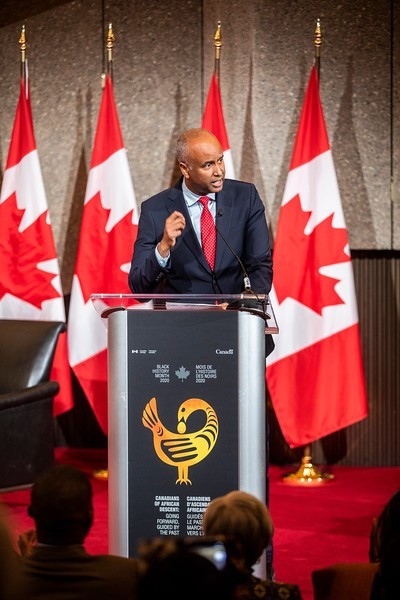
Speaking at a press conference on Wednesday, Ahmed Hussen, Canada’s Minister of International Development, said the fresh funding will support both Canadian and international relief agencies working on the ground in Lebanon. The money will be used to provide food, clean water, emergency medical care, shelter support, and other urgent assistance, although final allocations are still being determined.
“This conflict is taking a terrible toll on civilians in Lebanon and beyond,” Hussen said. “As of today, Canada has pledged $25 million to assist the humanitarian response for the most vulnerable people affected by this crisis.”
The newly announced funding follows $10 million in aid pledged in late September. Of that earlier amount, $6 million will be used to match donations up to $3 million each made by Canadians to the Red Cross and the Humanitarian Coalition as part of their Lebanon emergency appeals. Another $4 million will be divided between the UN Refugee Agency and the World Food Program.
In addition to financial aid, Canada is sending relief supplies from its emergency stockpiles, including 5,000 blankets and 1,000 hygiene kits, to help displaced families cope with deteriorating conditions.
Hussen said more than 2,000 people have been killed in Lebanon, including two Canadian citizens, with thousands more injured. The ongoing violence has placed extreme strain on humanitarian organizations, while shortages of food, medicine, shelter materials, and emergency health services continue to worsen.
In a statement, the Humanitarian Coalition urged Canadians to donate, noting that contributions made between September 24 and November 3 will be eligible for government matching. The coalition, which represents 12 of Canada’s largest aid organizations, warned that the situation is rapidly deteriorating.
“Many of our member association have worked in Lebanon for decades and are already delivering life-saving support,” said executive director Richard Morgan. “But the scale of this emergency is catastrophic. Humanitarian needs are massive.”
According to the coalition, the conflict has caused large-scale displacement, forcing many families to flee without basic necessities. The psychological impact on civilians is also severe. Nearly all of Lebanon’s 978 shelters are close to capacity, leaving many displaced people sleeping outdoors as colder weather approaches.
Meanwhile, Global Affairs Canada reported that it has helped almost 1,050 Canadians, permanent residents, and their immediate family members leave Lebanon so far, along with about 250 foreign nationals from other countries. The department says it is now receiving fewer than 100 new requests per day for departure information, and that all eligible travellers have either left, been offered departures, or are scheduled to leave in the coming days. On Monday and Tuesday alone, 205 people departed Lebanon with assistance.
As of October 8, more than 25,000 Canadians were registered as being in Lebanon, though officials stress the real number may be higher because registration is voluntary. Canada’s Foreign Affairs Minister Mélanie Joly has previously estimated that up to 45,000 Canadians may be in the country.
Hussen renewed calls on Canadians to leave Lebanon while commercial options remain available.
A spokesperson for Immigration Minister Marc Miller said the government is currently focused on helping Canadian citizens, permanent residents, and their spouses and children obtain the necessary travel documents. Ottawa is also prioritizing certain family-class permanent residence applications in response to the crisis.
As fighting continues, Canadian officials and humanitarian groups warn that the needs in Lebanon are growing by the day, and sustained international support will be critical in the weeks ahead.