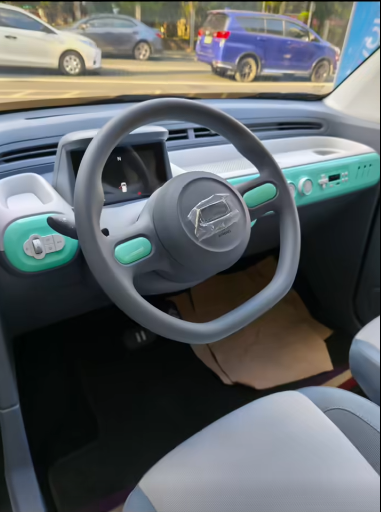
Canada’s decision to dramatically lower tariffs on Chinese-made electric vehicles may sound like a win for consumers at first glance, but beneath the promise of cheaper EVs lies a risky trade-off that could weaken an already fragile auto sector and strain Canada’s key trade relationships.
By allowing up to 49,000 Chinese-made EVs into the country each year at a reduced tariff of 6.1 per cent down from a punitive 100 per cent Ottawa is signalling a sharp shift in policy. Prime Minister Mark Carney’s deal with Chinese President Xi Jinping is being framed as a pragmatic re-engagement with the world’s second-largest economy. Yet for Canada’s auto workers and manufacturers, it looks less like pragmatism and more like a gamble.
Industry leaders and labour groups are right to be concerned. Canada’s auto sector has been under pressure for years, grappling with the costly transition to electrification, global competition, and uncertainty caused by U.S. trade policy. Into this environment, Ottawa is now inviting heavily subsidized Chinese EVs vehicles that benefit from massive state backing, lower labour costs, and an export-driven strategy designed to capture foreign markets.
Calling this a “self-inflicted wound,” Unifor’s Lana Payne put it bluntly: cheaper Chinese EVs could undercut domestic production, threaten Canadian jobs, and reward trade practices Canada itself has long criticized. These concerns aren’t abstract. Auto manufacturing remains a cornerstone of Canada’s industrial base, particularly in Ontario, and once production capacity is lost, it is rarely regained.
Supporters of the deal argue the numbers are small. Forty-nine thousand vehicles represent roughly 2.5 to 3 per cent of Canada’s annual vehicle sales hardly a market takeover. Economists note that in the short term, the impact may indeed be limited, especially since Canada currently produces relatively few EVs domestically. But focusing only on the immediate effect misses the bigger picture.
This deal sets a precedent. Today it’s 49,000 vehicles; tomorrow it could be far more. Once Chinese brands establish a foothold, scale follows. Over time, that could reshape Canada’s EV market in ways that make it even harder for domestic and North American manufacturers to compete particularly on price.
There are also geopolitical and trade implications. Canada’s EV tariffs were originally aligned with those of the United States and the European Union, both of which cited national security and unfair trade practices. By breaking ranks, Canada risks complicating its commitments under CUSMA and potentially inviting retaliation or reduced access to the U.S. market a concern Ontario Premier Doug Ford has already raised.
Yes, consumers want more affordable EVs. With average prices hovering near $67,000, electric vehicles remain out of reach for many Canadians. If Chinese imports can genuinely bring prices below $35,000, that will help adoption and climate goals. But affordability should not come at the cost of hollowing out domestic industry or increasing dependence on a trading partner with a track record of economic leverage.
The canola tariff relief China has offered in return underscores the uncomfortable reality of this deal: Canada appears to be balancing one sector’s survival against another’s. Farmers gain short-term relief; auto workers face long-term uncertainty. That is not a sustainable industrial strategy.
Competition can benefit consumers, but only when it operates on a level playing field. Without clear, enforceable rules on subsidies, labour standards, cybersecurity, and market access, Canada risks trading short-term price relief for long-term economic weakness.
Re-engaging with China may be inevitable. Doing so without a robust plan to protect Canadian industry and jobs is not.