When Politics Enters the Liquor Aisle: Why Weaponizing the LCBO Is a Bad Idea
Taslima Jamal
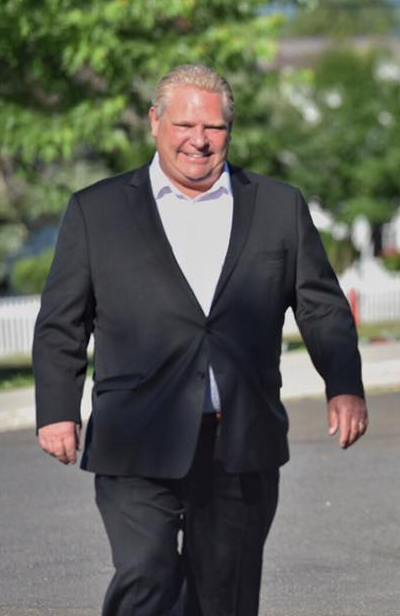
Premier Doug Ford’s renewed threat to pull Crown Royal from LCBO shelves is being framed as standing up for Ontario jobs. In reality, it looks far more like a political stunt that risks undermining consumer choice, investor confidence, and the very free-market principles the Progressive Conservatives claim to champion.
Ford has made it clear: once Diageo closes its Amherstburg bottling plant, Crown Royal will be removed from Ontario’s government-run liquor stores. The move is meant to punish the global drinks giant for shifting production as part of a broader restructuring. But Diageo has been equally clear that the decision has nothing to do with tariffs or politics. Bottling for the U.S. market will move south, while Canadian bottling will continue just not in Ontario.
Turning the LCBO into a blunt economic weapon may sound satisfying in a headline, but it raises serious questions about how Ontario treats businesses that make unpopular decisions. As Jay Goldberg of the Consumer Choice Centre rightly points out, threatening companies for restructuring choices sends a chilling message to investors. Companies considering Ontario will see not just tax rates and labour costs, but political risk: the possibility that the government might retaliate if a decision doesn’t play well politically.
That’s not how you build a strong, competitive economy.
If Ontario wants to keep plants open and jobs local, the answer lies in making the province the best place to invest through competitive taxes, reliable infrastructure, skilled labour, and regulatory certainty. Punitive gestures don’t change global supply chains or corporate restructuring plans. They simply add noise and uncertainty.
There’s also the consumer angle, which seems to be an afterthought in all of this. The LCBO exists, at least in theory, to serve consumers. Pulling a popular Canadian whiskey from shelves doesn’t help laid-off workers in Amherstburg. It doesn’t force Diageo to reverse its decision. What it does do is limit choice for Ontarians, who will pay the price for a political feud they had no say in.
Ontario Liberal MPP John Fraser is correct to call this out as “all show.” The premier’s tough talk may play well with some voters, but it offers no real solution for workers facing displacement. If the government truly wanted to help, it would focus on transition support, retraining programs, and attracting new employers to the region not symbolic boycotts.
Perhaps the most striking contradiction is ideological. This is a Progressive Conservative government taking an explicitly anti–free market stance. Free markets empower consumers to decide what they buy and companies to decide how they operate within the rules. Using government monopoly power to dictate outcomes is, by definition, big government.
Ford at one point even floated the idea of removing other Diageo products, like Smirnoff, before backing away. That retreat suggests even the government understands how far down this road it could go and how messy it could become.
Ontario doesn’t need a premier who polices liquor shelves to make political points. It needs one who focuses on creating conditions where businesses want to stay, invest, and grow. Weaponizing the LCBO may grab attention, but in the long run, it risks doing far more harm than good.