Kitchen Cabinets, Crushed by Tariffs: Why Ottawa Can’t Ignore a $4.7-Billion Industry
Abdur Rahman Khan
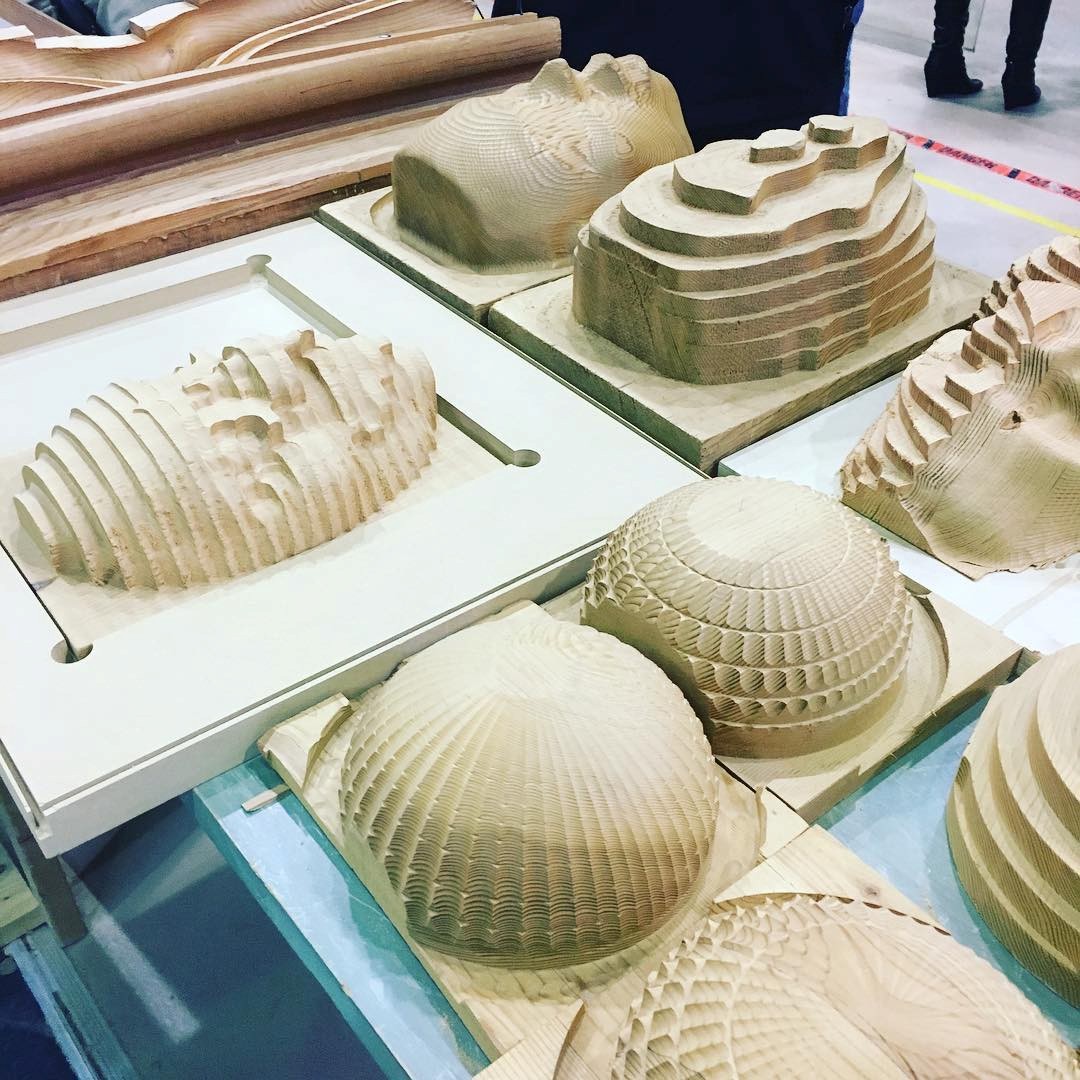
When U.S. President Donald Trump postponed another round of tariff hikes on Canadian furniture and kitchen cabinets, it was supposed to be good news. For an industry staring down the barrel of duties as high as 50 per cent, a pause sounds like mercy.
But for Canada’s kitchen cabinet and furniture manufacturers, this is no reprieve. It is simply a slower bleed.
The sector is already buckling under the weight of the 25 per cent tariffs imposed in October. Calling off a further increase doesn’t undo the damage already done. As Luke Elias, vice-president of the Canadian Kitchen Cabinet Association, bluntly put it: “Yes, 50 per cent is a relief. But our industry is still reeling from the 25 per cent.”
He’s right. Tariffs at that level aren’t something manufacturers can absorb or “optimize” away. This is not a tech startup that can pivot overnight. Cabinet manufacturing is capital-intensive, labour-heavy, and deeply integrated across the Canada–U.S. border. When you slap a 25 per cent penalty on exports, you don’t encourage adjustment you erase profit.
A $4.7-billion Canadian industry is now fighting for survival. About $600 million worth of cabinets and related products are exported every year, mostly to the United States. For many firms, that market isn’t optional it’s foundational.
Take Manitoba-based Elias Woodwork. The company employs more than 400 people and ships roughly 80 per cent of its products south of the border. Its president, Ralph Fehr, said the existing tariffs have already stripped the business of its margins. A 50 per cent duty, he said, would have been catastrophic.
And his frustration cuts to the heart of the problem. For decades, Ottawa encouraged manufacturers to build export-driven businesses tied to the U.S. market. Entrepreneurs like Fehr spent their lives following that advice, investing, hiring, and integrating supply chains across borders. Now, with a stroke of Trump’s pen, that entire model is in jeopardy.
What makes the situation even more absurd is how “Canadian” these products really are and how “American” their inputs often are. Many Canadian cabinet makers import hardwood lumber from the United States, add value through skilled Canadian labour, and then sell finished products back to American customers. Tariffs punish not just Canada, but the very cross-border manufacturing ecosystem North America claims to value.
The consequences are already visible. Layoffs have begun. Industry meetings are filled with warnings of more job losses to come. More than 3,500 companies and 25,000 Canadian workers are being squeezed, largely out of the public eye.
That invisibility is part of the problem.
Steel and automobiles dominate headlines and political talking points. Kitchen cabinets do not. Yet they are in every home, every condo, every renovation. This is not a niche industry it’s a quiet backbone of Canadian manufacturing.
There is also a deeper trade irritant that cannot be ignored. Canadian manufacturers have long warned about low-priced cabinet parts from Asia entering Canada, being assembled, and then shipped to the U.S. under a “made-in-Canada” label. The U.S. cabinet industry argues not without reason that this practice undermines anti-dumping measures aimed at China.
In 2020, the U.S. imposed duties on Chinese cabinets. According to the American Kitchen Cabinet Alliance, China didn’t disappear from the market it simply rerouted through Canada and Mexico. That allegation is now fueling American pressure to tighten rules of origin under CUSMA.
Here lies the danger. If Canada fails to address these loopholes credibly, it risks being lumped together with bad actors and paying the price through blanket tariffs that hammer legitimate domestic producers.
Trump says the furniture tariffs are about protecting American industry and national security. That claim is debatable at best. What is not debatable is that the tariffs are devastating Canadian manufacturers who play by the rules.
As the CUSMA review approaches, Ottawa cannot afford to let this industry become collateral damage. Build Canada procurement policies are a start, but they are not enough. Support must extend to provincial incentives, and enforcement must ensure that “made in Canada” actually means made in Canada.
Trade negotiations with Trump will be tense. He has already shown a willingness to walk away. But silence or inaction is not neutrality it is surrender.
Kitchen cabinets may not make headlines. They may not roar off assembly lines like cars or glow like molten steel. But they employ tens of thousands of Canadians, anchor regional economies, and represent decades of patient industrial building.
If Ottawa allows this industry to be ignored, it won’t just lose cabinets. It will lose credibility and another piece of Canada’s manufacturing future.


![Three smiling women sit on a colorful padded floor, posing with a large sign that reads Canada Child Benefit and its French translation, in a community setting with a pillow saying This Classroom Runs on Kindness nearby.]','Three women pose for a group photo indoors, holding a white board about the Canada Child Benefit and its French equivalent, with colorful circles in the design and a kindness-themed cushion nearby.'] }``` Wait formatting wrong. We must provide proper JSON. Let's craft properly. Provide 5 options. Ensure no stray quotes. Let's produce proper JSON. Use single quotes in descriptions? Must be double quotes. I'll provide array of strings. Ensure no stray characters. Let's do. } For safety. Let's output.} Let's craft final.} Wait earlier included typos. Let's deliver.]]>](https://www.thesouthasiajournal.com/wp-content/uploads/2026/07/12-2-390x220.jpg)