Hedging Against Washington: Why Ontario’s Defence Pivot Makes Sense with Caveats
Taslima Jamal
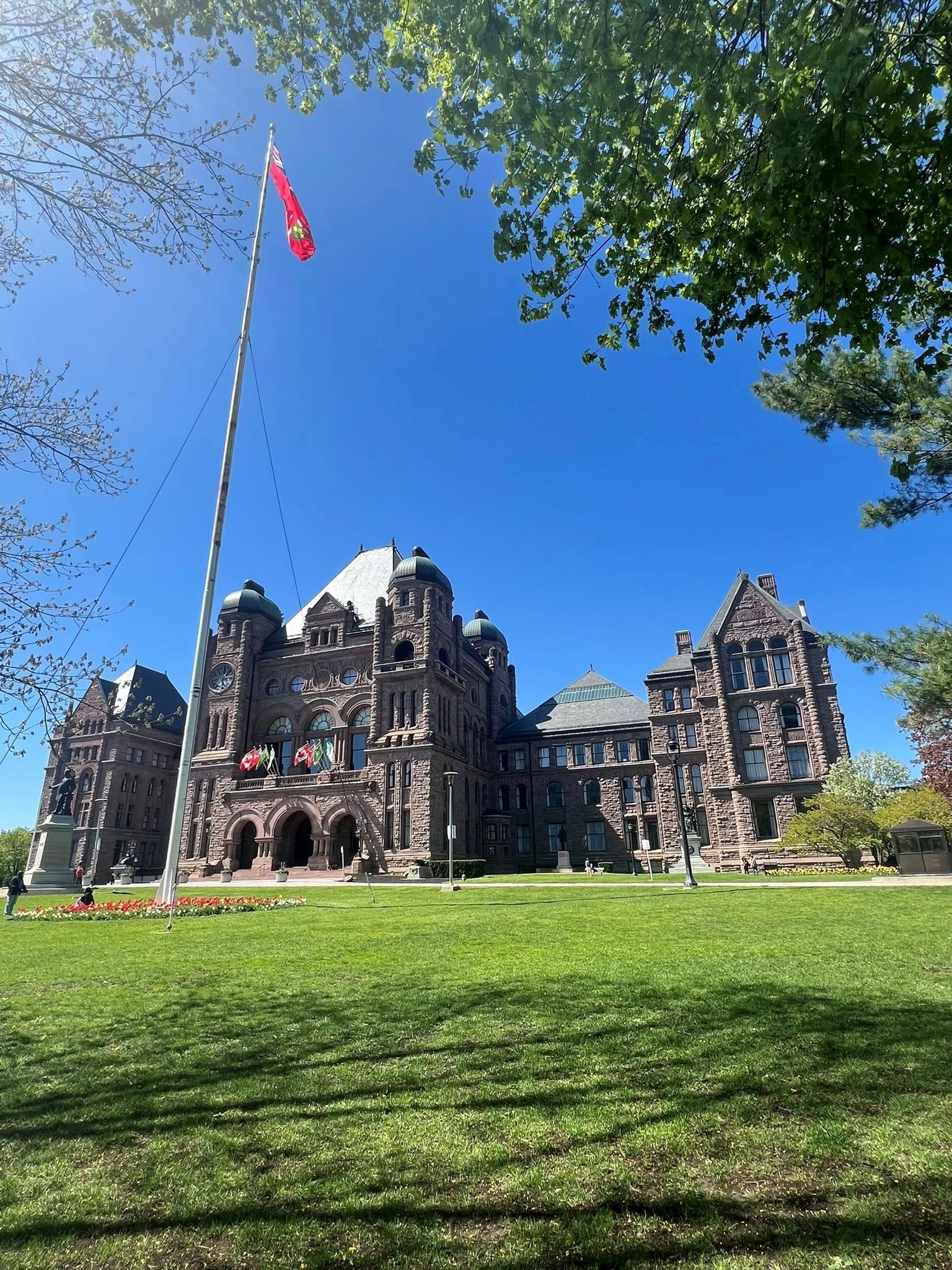
Ontario’s economic strategy is quietly undergoing a reset, and it’s being driven less by ambition than by anxiety. As the United States continues to jolt global trade with unpredictable policies and tariff threats, Queen’s Park is looking for ways to steady the province’s economic footing. Economic Development Minister Vic Fedeli’s answer is clear: diversify fast, look outward, and lean hard into defence manufacturing.
Fedeli, often described as Ontario’s chief salesperson, spent much of the past year crisscrossing the globe 20 countries in all trying to build new trade relationships and reduce reliance on the U.S. market. His reasoning is hard to fault. When trade policy can change overnight with a social media post, even the most stable economic partnerships begin to feel fragile. As Fedeli bluntly put it, many governments now wake up each morning wondering what “new hell” might arrive from Washington.
In that context, Ontario’s turn toward the defence sector is both pragmatic and opportunistic. Defence spending is rising worldwide, driven by geopolitical instability and massive commitments such as the European Union’s $1.3-trillion ReArm Europe plan. Someone will supply the steel, the components, the armoured vehicles, and the critical minerals needed to make that spending real. Fedeli wants Ontario to be among them.
The focus on Algoma Steel is a case in point. With defence and infrastructure demand set to surge, the province and federal government see an opening to expand Algoma’s capacity through a second steel plate line and new I-beam production. If successful, the investment could anchor long-term industrial capacity in Northern Ontario and bring back jobs something the region badly needs after the recent announcement of roughly 1,000 layoffs.
Still, the Algoma story also reveals the tension at the heart of this strategy. Governments have already poured half a billion dollars into the company, only to see significant job losses follow. Critics argue that public money should have come with ironclad employment guarantees. Fedeli counters that without government support, Algoma wouldn’t be operating at all. Both things can be true and that’s exactly why Ontarians remain skeptical. Supporting industry is one thing; ensuring that public investment delivers public benefit is another.
The defence push raises ethical questions as well. Ontario companies like Roshel, which recently sold armoured vehicles to U.S. Immigration and Customs Enforcement, have drawn criticism from human rights organizations. Fedeli and Premier Doug Ford have chosen to stand by the company, framing such sales as private business decisions. From a jobs-first perspective, that stance is consistent. From a values-based one, it’s far more uncomfortable.
There’s also an inherent contradiction in trying to reduce dependence on the U.S. while celebrating U.S. military contracts. Fedeli dismisses the tension, arguing that the province’s role is to add value and create jobs, not to police private trade relationships. That may be politically convenient, but it doesn’t fully answer the concern. Diversification that still leans heavily on American demand is, at best, an incomplete insurance policy.
Ontario’s defence strategy is understandable, and in many ways necessary. Global instability is fuelling defence spending and ignoring that reality would be naïve. But as the province doubles down on this sector, it must do so with clearer guardrails: stronger accountability for public investments, greater transparency around job creation, and a more honest reckoning with the moral trade-offs involved.
If defence is going to be the ship that steadies Ontario’s economic waters, the province must make sure it’s not quietly tethered to the same currents it’s trying to escape.