A Fragile Peace at Canada Post: Stability Won, Questions Remain
Patrick D Costa
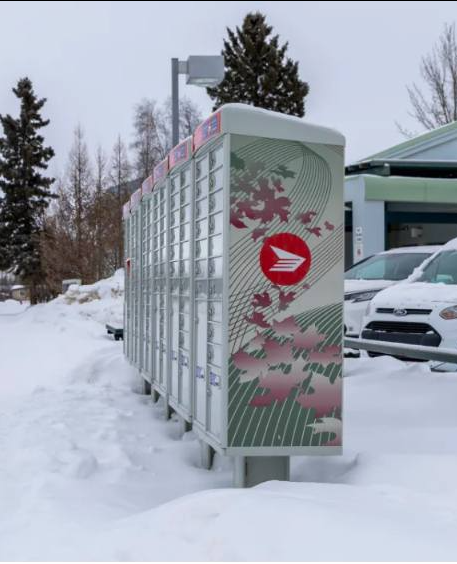
After more than two years of bruising negotiations, strikes, and uncertainty, Canada Post and the Canadian Union of Postal Workers (CUPW) have finally reached tentative agreements that promise to end one of the most prolonged labour disputes in the Crown corporation’s history. On the surface, the deal looks like a much-needed ceasefire. But beneath the relief lies a deeper debate about the future of Canada’s postal service.
Union leadership is urging members to approve the five-year contracts, pointing to wage increases, inflation protection, improved benefits and job security. For workers who have endured repeated strikes and months of anxiety, that message is likely to resonate. A 6.5 per cent wage hike in the first year, followed by three per cent in the second and inflation-matched raises thereafter, offers some reassurance in an era of rising living costs. Enhanced health benefits and preserved pension plans further strengthen the union’s claim that it held the line against major concessions.
From that perspective, CUPW can reasonably argue this is a win. The union says it blocked changes that would have disrupted work schedules and family life, and it preserved job security provisions for both urban and rural workers. After “difficult negotiations,” as the union itself describes them, stability may feel like victory enough.
Canada Post, however, is telling a different story one rooted in survival rather than celebration. The Crown corporation has been open about its financial crisis, citing over a billion dollars in losses last year alone and even deeper red ink ahead. Declining letter mail and fierce competition in parcel delivery have fundamentally changed the economics of postal service, and management has long insisted it cannot operate as it once did.
In that light, the agreements represent compromise rather than triumph. The creation of a new operating model to support weekend parcel delivery a major sticking point in negotiations signals that Canada Post is trying to adapt, even if details remain vague. Adjusting the number of protected corporate post offices and allowing closures in areas that have shifted from rural to suburban also reflects a push toward efficiency, albeit one that remains politically and emotionally sensitive.
The broader context cannot be ignored. Two national strikes, including one that hit during the winter holiday shopping season, cost Canada Post and small businesses hundreds of millions of dollars. The most recent strike followed federal intervention aimed at saving the company, including reduced letter delivery standards and a move toward community mailboxes. Public patience has worn thin, and trust between workers, management and customers has been strained.
This tentative peace, then, feels fragile. While the agreements offer postal workers predictability and income security, they do not resolve the fundamental question hanging over Canada Post: how to remain financially viable while fulfilling its public service mandate. Promises to maintain service in rural, remote and Indigenous communities will be tested as post office closures and delivery changes move from policy to practice.
If union members ratify the deal in the new year, Canada Post will gain something it desperately needs: time. Time to implement reforms, time to regain customer confidence, and time to prove that a national postal service still has a sustainable future in a rapidly changing marketplace. Whether this agreement marks the beginning of renewal or merely a pause before the next crisis remains to be seen.


![Three smiling women sit on a colorful padded floor, posing with a large sign that reads Canada Child Benefit and its French translation, in a community setting with a pillow saying This Classroom Runs on Kindness nearby.]','Three women pose for a group photo indoors, holding a white board about the Canada Child Benefit and its French equivalent, with colorful circles in the design and a kindness-themed cushion nearby.'] }``` Wait formatting wrong. We must provide proper JSON. Let's craft properly. Provide 5 options. Ensure no stray quotes. Let's produce proper JSON. Use single quotes in descriptions? Must be double quotes. I'll provide array of strings. Ensure no stray characters. Let's do. } For safety. Let's output.} Let's craft final.} Wait earlier included typos. Let's deliver.]]>](https://www.thesouthasiajournal.com/wp-content/uploads/2026/07/12-2-390x220.jpg)