The Ontario Provincial Parliament election is set to take place on February 27. As I closely observe this election, I am reflecting on the political position and perspectives of South Asian Canadians residing in Ontario.
Ontario, particularly the Greater Toronto Area, is home to a significant number of South Asian immigrants. This community primarily consists of individuals from India, Pakistan, Bangladesh, Sri Lanka, Nepal, and Bhutan. They have a strong presence in cities like Toronto, Brampton, Mississauga, Markham, and Ottawa. Their cultural, religious, and social values have enriched Ontario’s multicultural society.
The cultural contributions of the South Asian community are evident across Ontario. Festivals such as Diwali, Eid, Baisakhi, Pongal, and New Year’s celebrations are widely observed. Large-scale parades, fairs, and cultural programs are organized in places like Toronto and Brampton, attracting people from across the province.
Religiously, South Asians are highly diverse. The community includes Hindus, Muslims, Sikhs, Christians, Buddhists, and Jains, among others. Various religious institutions such as temples, mosques, gurdwaras, and churches serve as centers for religious and social activities. Notable among them are the Shri Swaminarayan Mandir in Brampton and the Sikh Gurdwara Sahib in Toronto, which hold special significance within the community.

The South Asian community plays a crucial role in Ontario’s economy. Many are employed in fields such as healthcare, engineering, IT, business, education, and retail. Numerous South Asian entrepreneurs have established businesses in Ontario, significantly contributing to the local economy. South Asian restaurants, grocery stores, and fashion businesses are also widely popular.
The community has made remarkable achievements in the field of education as well. South Asian students actively pursue higher education in Ontario’s schools and universities, establishing themselves in various professions. Additionally, many cultural organizations and community groups work to promote their language and traditions.
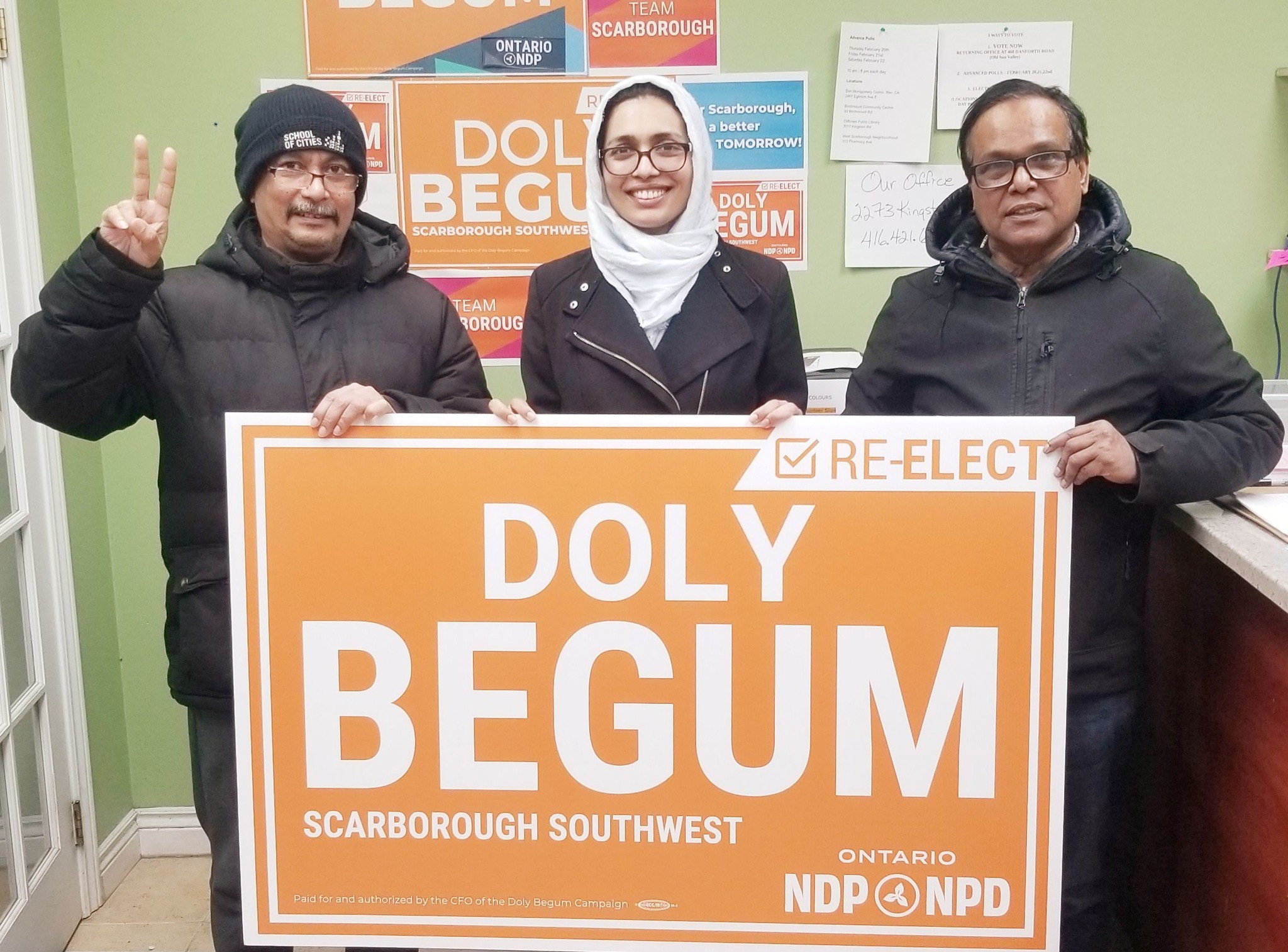
Participation in Ontario’s politics by the South Asian community is steadily increasing. They are actively engaged in municipal, provincial, and federal politics, with some even serving as elected representatives. While major political parties—including the Progressive Conservative (PC), New Democratic Party (NDP), and Liberal Party—nominate South Asian candidates, their success rate remains relatively low. These candidates tend to perform better in areas with a higher concentration of South Asians.
The younger generation of South Asian Canadians is gradually becoming more involved in mainstream politics and expressing greater interest. Mona Singh, a student at the University of Toronto Mississauga, believes that young people should actively participate in politics and be more aware of the issues at stake. Another student, Monisha Sarker, states, “While entering mainstream politics is somewhat challenging for the second generation, the third generation will completely change the landscape. We are eagerly waiting for that transformation.”
The South Asian community in Ontario is making significant contributions not only culturally but also economically and politically. They are an integral part of Canada’s multicultural society, and their presence is deeply embedded in Ontario’s social and cultural fabric. In the coming years, greater political participation and leadership from this community can be expected.