Ontario’s Housing Ambitions Collide with Cold Reality as 2031 Deadline Looms
Sathia Kumar
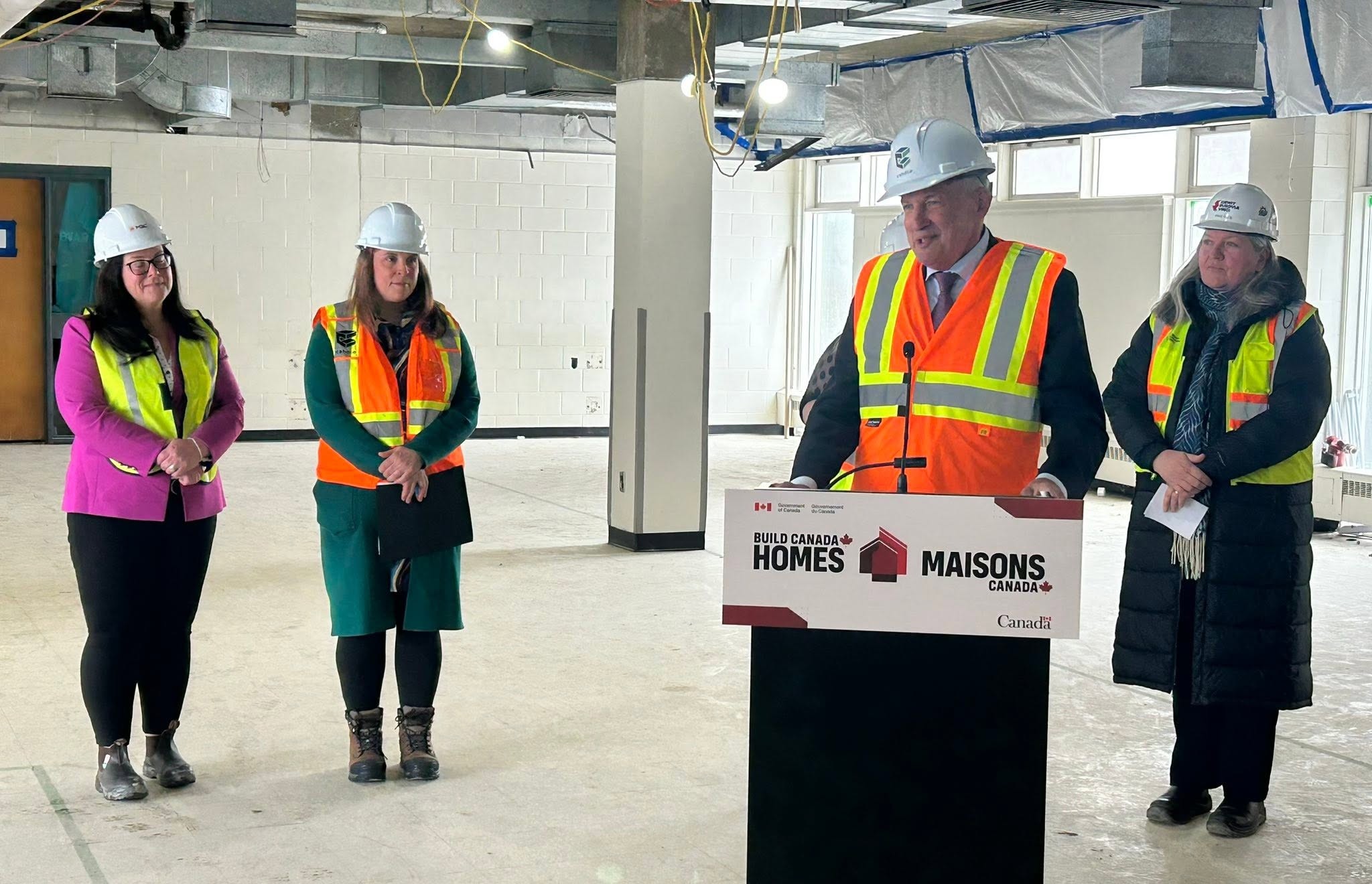
The numbers don’t lie, and right now they’re telling a story Ontario’s government would rather not hear.
Fresh data from the Canadian Mortgage and Housing Corporation shows that housing construction across the province slipped three per cent last month compared to the same time a year ago. Builders broke ground on 5,661 new units in May a modest step back from the 5,866 recorded in May 2025. Nationally, the picture was even softer, with starts falling by about five per cent year-over-year.
It’s a minor stumble after what had been a reasonably encouraging start to 2026. Annual figures are still tracking 18 per cent ahead of last year’s pace, which is meaningful progress just not nearly enough.
Ontario entered this decade with a bold pledge: 1.5 million new homes built between 2022 and 2031. It’s the kind of number that sounds transformative in a press release. On a spreadsheet, it demands building 175,000 homes every single year.
So far in 2026, the province has started work on 26,084 units. With 42 per cent of the year already behind us, Ontario has completed roughly 15 per cent of its annual target. That gap isn’t a rounding error it’s a structural problem.
Even last year, when the government counted basement suites, long-term care beds, and student housing to pad the tally, Ontario still only reached 80 per cent of its 125,000 goal. This year’s bar is set higher still, at 175,000 a number that, by the province’s own admission, is now more aspiration than expectation. Finance Minister Peter Bethlenfalvy acknowledged as much late last year, calling the 1.5 million target a “soft goal.”
Give Premier Doug Ford credit for one thing: he hasn’t been short on ideas. The problem is that each idea has come with an expiry date.
When housing starts faltered a few years back, Ford pointed to high interest rates as the culprit, famously promising that new homes would grow “like mushrooms” once borrowing costs came down. When rates did fall and the construction boom never arrived, that explanation quietly gave way to another: cities and their approval processes were the bottleneck. The province pushed through a series of bills aimed at cutting red tape and forcing municipalities to move faster.
Then came a new home tax incentive for first-time buyers. Within months of its introduction, Ford himself conceded it wasn’t doing enough and called for it to be expanded. The 2026 budget made that expansion official, broadening the HST relief to cover all new homebuyers not just first-timers. A parallel deal with the federal government also reduced the development charges that builders pay to municipalities, an added cost that the industry has long cited as a barrier to getting shovels in the ground.
Housing Minister Rob Flack has been upbeat about the results. “We are seeing a game-changing event,” he told the legislature recently, describing a buzz in sales offices and deals being closed from Kingston to Hamilton. “Housing affordability has been out of reach for too many for too long,” he said, pointing to the HST cut as proof that the government is delivering.
The challenge, of course, is that a buzz in a sales office and a building permit are two very different things. Sales commitments don’t show up in housing start data until construction actually begins and right now, what’s beginning is still falling well short of what’s needed.
Ontario has also tied financial incentives to its municipal partners, rewarding towns and cities that hit their own assigned housing targets. It’s a sensible carrot-and-stick approach in theory. In practice, even municipalities making genuine efforts are operating in a market shaped by labour shortages, rising material costs, and cautious lenders.
The province heads into the second half of 2026 still needing to build at a pace it has never come close to sustaining. With five years left on the clock before the 2031 deadline, the math has become almost impossible to ignore even if the government prefers not to dwell on it.